
Category: Taxes | Debt Management | Financial Foundation
Every year, thousands of people open their tax return and discover something they weren’t expecting:
They owe the IRS money.
For some, it’s a few hundred dollars.
For others, it’s several thousand.
The first reaction is often fear.
“How am I ever going to pay this?”
The good news is this:
The IRS would rather work with you than against you.
If you can’t pay your tax bill in full, one of the best things you can do is contact the IRS and explore your payment options. Ignoring the problem almost always makes it more expensive because penalties and interest continue to grow.
Let’s look at when an IRS payment plan makes sense, how it works, whether it’s right for you, and what other options may be available.
First Things First: Always File Your Tax Return
One of the biggest mistakes people make is not filing their tax return because they can’t afford to pay.
Always file your return on time—even if you cannot pay the full amount.
Why?
The IRS charges a much larger penalty for failing to file than for failing to pay. Filing your return keeps more options available and usually reduces the overall amount you’ll owe.
Filing your return shows the IRS that you’re making a good-faith effort to meet your tax obligations.
What Is an IRS Payment Plan?
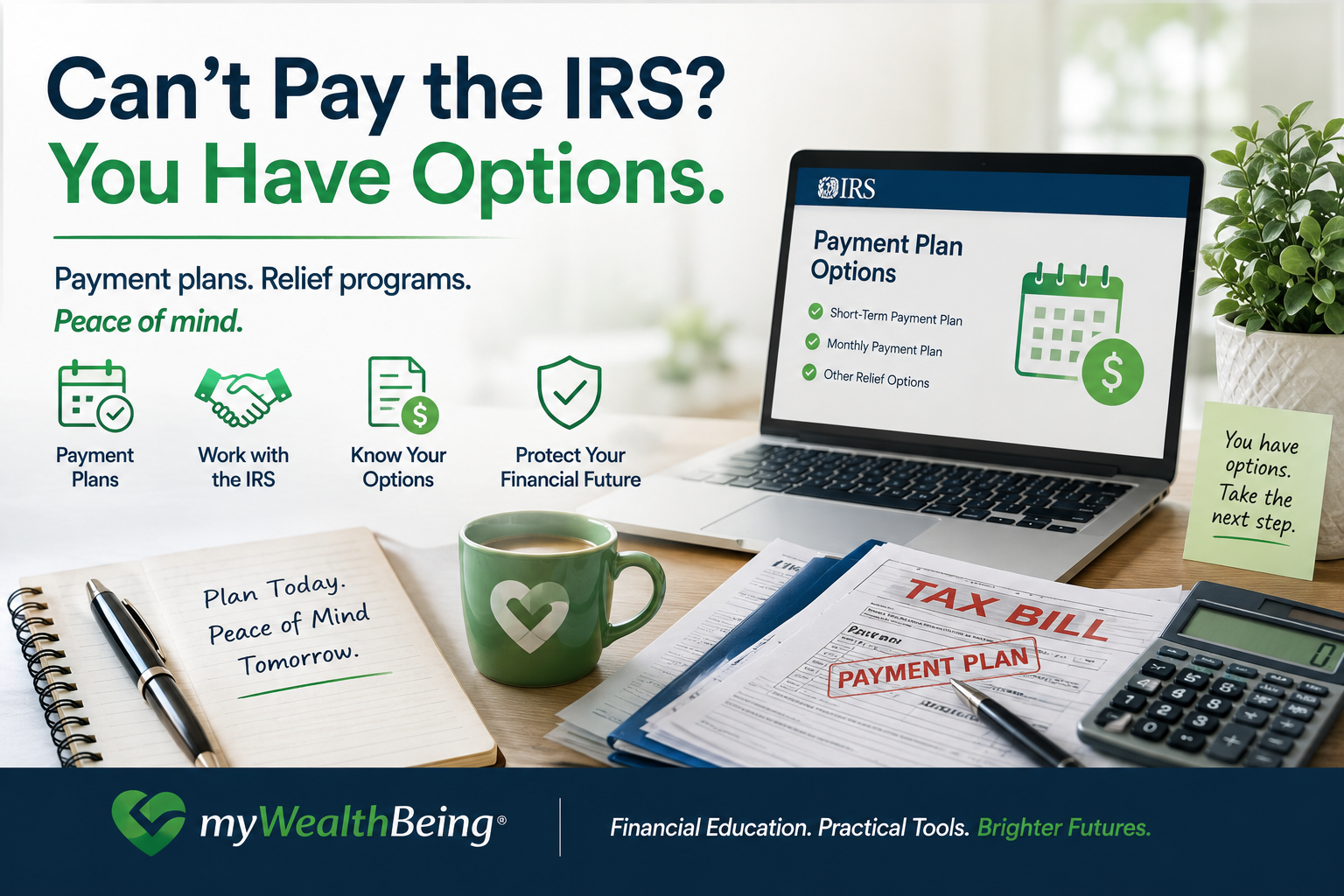
An IRS Payment Plan (also called an Installment Agreement) allows you to pay your tax bill over time instead of paying everything at once.
Depending on how much you owe, you may qualify for:
- Short-Term Payment Plan – up to 180 days to pay.
- Long-Term Monthly Payment Plan – monthly payments over a longer period.
For many taxpayers, this is the easiest and most affordable way to resolve a tax balance.
Many People Can Apply Online
If you can’t pay your tax bill in full, you may not need to call the IRS.
Many taxpayers qualify to apply online for either a short-term or long-term payment plan through the IRS Online Payment Agreement system.
Before you apply, it’s important to understand what you can realistically afford each month. A payment plan should reduce stress—not create additional financial hardship.
You can learn more and determine whether you qualify by visiting the official IRS Online Payment Agreement page:
IRS Online Payment Agreement Application
https://www.irs.gov/payments/online-payment-agreement-application
Do You Qualify?
Many individuals qualify to apply online.
Generally, you may qualify if:
Short-Term Payment Plan
- You owe less than $100,000 in combined taxes, penalties, and interest.
Long-Term Monthly Payment Plan
- You owe $50,000 or less in combined taxes, penalties, and interest.
- You have filed all required tax returns.
If you owe more than these amounts, don’t assume you’re out of options. The IRS has additional payment programs that may still work for your situation.
How to Prepare Before You Apply
Before submitting your application, spend a few minutes preparing.
Doing so will help you choose a payment that fits your budget and improves your chances of long-term success.
Step 1: Know Exactly How Much You Owe
Review your tax return or log into your IRS Online Account to verify your current balance.
Knowing the exact amount eliminates surprises and helps you plan.
Step 2: Build a Monthly Budget
This may be the most important step.
Before agreeing to any monthly payment, understand exactly how much money you have available after paying for your essential expenses.
Remember:
A payment that is too high may create additional financial stress and increase the risk of falling behind again.
Your goal is not to get the highest payment approved.
Your goal is to choose a payment you can comfortably make every month.
Step 3: Gather Your Financial Information
Before beginning the application, have these items available:
- Your most recent tax return
- Your Social Security Number
- Your bank account information (if using automatic payments)
- Your monthly income and expense information
Being organized makes the application process much easier.
Step 4: Apply Online
Once you know what you can realistically afford, complete the application through the IRS website.
IRS Online Payment Agreement Application
https://www.irs.gov/payments/online-payment-agreement-application
Many taxpayers receive an immediate response after submitting their application online.
The Pros of an IRS Payment Plan
An IRS payment plan offers several advantages.
It Reduces Stress
Instead of worrying about paying thousands of dollars immediately, you create a realistic monthly payment.
That alone can provide tremendous peace of mind.
It Helps You Stay Current
Once your payment plan is approved and you continue making your payments while filing future tax returns on time, you greatly reduce the likelihood of additional collection actions.
The Process Is Straightforward
Many taxpayers complete the entire application online in just a few minutes.
There is no need to hire a company just to apply.
It May Be Less Expensive Than Borrowing
Some people immediately consider taking out a personal loan.
Before doing that, compare the total interest costs.
In many situations, an IRS payment plan may cost less than a high-interest personal loan or credit card.
The Cons of an IRS Payment Plan
Like any financial decision, there are tradeoffs.
Interest Continues
Interest generally continues to accrue until the balance is paid in full.
Some Penalties May Continue
Although filing your return avoids the much larger failure-to-file penalty, certain penalties may continue while the balance remains unpaid.
There May Be a Setup Fee
Some long-term payment plans include a setup fee.
However, reduced fees—or even waived fees—may be available for qualifying low-income taxpayers.
Is an IRS Payment Plan Right for You?
An IRS payment plan is often a good option if:
✅ You owe taxes but cannot pay today.
✅ You have steady income.
✅ You can comfortably make monthly payments.
✅ You want to avoid additional collection activity.
It may not be the best option if:
- You can pay the balance within a few weeks.
- You qualify for another form of IRS relief.
- Making payments would prevent you from paying for basic living expenses.
Every financial situation is different.
Other Options You Should Know About
An installment agreement isn’t the only solution.
Depending on your circumstances, you may also qualify for:
Short-Term Payment Extension
If you only need a few extra months, a short-term payment plan may be enough.
Offer in Compromise
Some taxpayers experiencing significant financial hardship may qualify to settle their tax debt for less than the full amount owed.
Qualification requirements are strict, and not everyone is eligible.
Currently Not Collectible Status
If paying the IRS would prevent you from covering your basic living expenses, the IRS may temporarily suspend collection activity until your financial situation improves.
Penalty Relief
Some taxpayers qualify to have penalties reduced or removed.
It never hurts to ask or consult a qualified tax professional.
Be Careful of Companies That Promise to “Settle Your Tax Debt”
You’ve probably seen advertisements promising to settle IRS debt for “pennies on the dollar.”
Be cautious.
While legitimate IRS relief programs exist, not everyone qualifies.
Some companies charge thousands of dollars for services that many taxpayers can request directly through the IRS.
If you’re unsure where to begin, start with the IRS before paying someone else.
Coaching Moment
Owing taxes can feel overwhelming.
But remember:
The IRS is usually much easier to work with when you contact them before they have to contact you.
- Taking action shows responsibility.
- Ignoring the problem makes it more expensive.
- And before you decide how much you can pay each month, know your budget.
The goal isn’t simply to get approved for a payment plan. The goal is to create a payment plan you can successfully maintain.
One Action Step This Week
If you owe taxes:
✅ Find out exactly how much you owe.
✅ Review or create your monthly budget.
✅ Decide what monthly payment comfortably fits your finances.
✅ Visit the IRS Online Payment Agreement Application to see whether you qualify.
Small actions today can prevent much bigger problems tomorrow.
Ready to Build a Plan?
Before agreeing to any monthly payment, make sure it fits comfortably within your budget.
Inside myWealthPortal, you can:
- Create a monthly budget
- Track your income and expenses
- Monitor your cash flow
- Determine what monthly payment is realistic
- Build an emergency fund
- Plan for long-term financial goals
When you know your numbers, you’ll feel much more confident working with the IRS.
If you’re ready to explore your options, visit the official IRS Online Payment Agreement Application:
https://www.irs.gov/payments/online-payment-agreement-application
Remember, owing taxes doesn’t mean you’ve failed.
It means you have a financial challenge that needs a plan.
- Take one step at a time.
- Build a realistic budget.
- Work with the IRS.
- Keep moving forward.
That’s how lasting financial progress is built.
💚 At myWealthBeing, we believe financial confidence begins with knowledge, grows through good habits, and leads to lasting wealth.