
Most people don’t have a money problem.
They have an awareness problem.
They work hard.
They earn income.
They try to be responsible.
But at the end of the month, they wonder:
“Where did it all go?”
That question alone tells you something important:
You’re not tracking.
And until you track your spending, everything else — saving, investing, debt payoff — feels harder than it needs to be.
Let’s simplify this.
Tracking Is Not About Judgment
Tracking your spending is not about feeling guilty.
It’s not about shame.
It’s not about cutting everything fun.
It’s not about perfection.
Tracking is about clarity.
When you see your money clearly, you make better decisions.
Without clarity, you guess.
And guessing with money is expensive.
Start With Five Simple Categories
You do not need 25 detailed budget categories to begin.
Start simple.
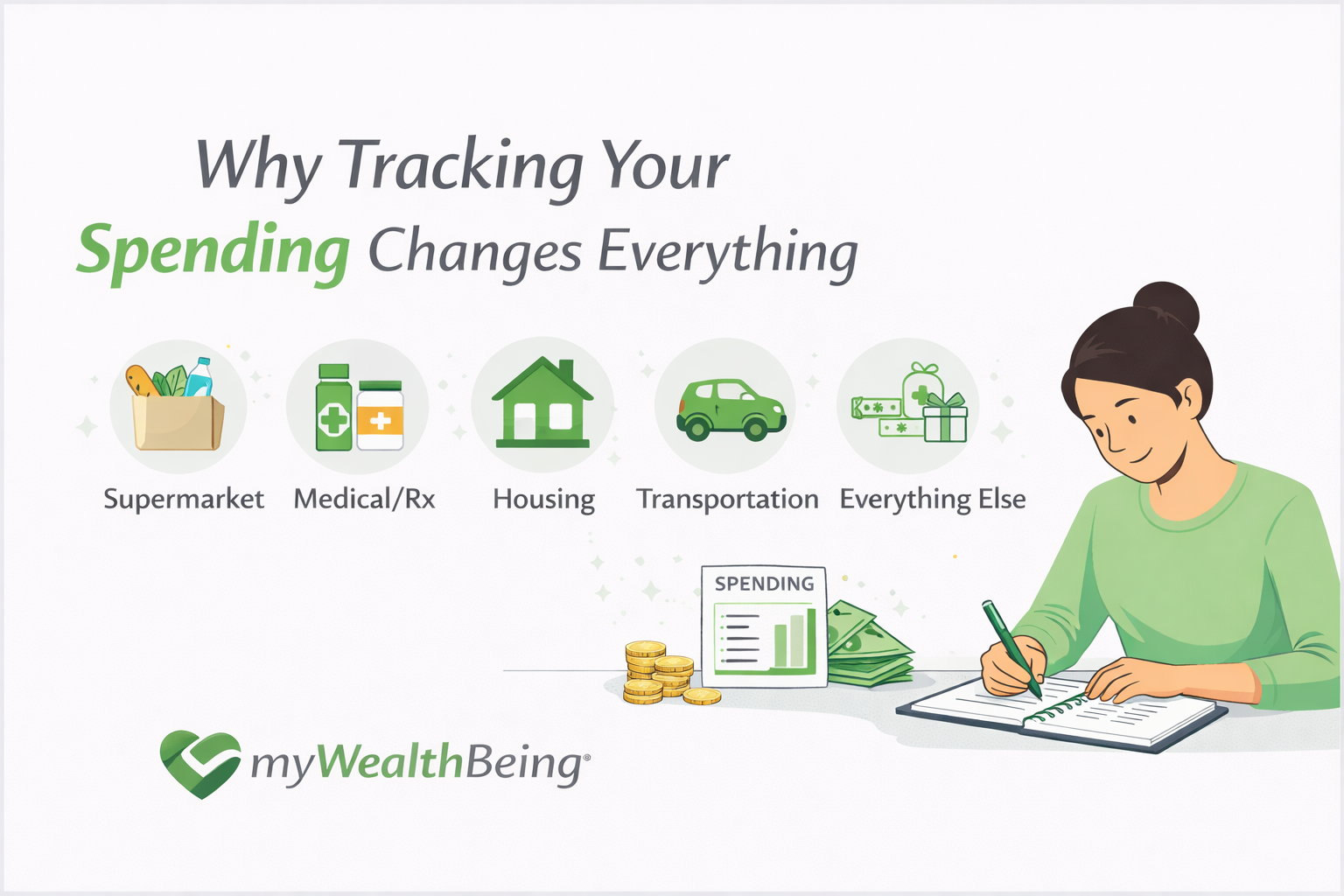
Track your spending into five basic buckets:
1️⃣ Supermarket
If you don’t eat, you die.
This includes:
- Groceries
- Basic household food
- Essential items from grocery stores
Food is not optional.
But overspending on food without noticing can quietly affect your entire budget.
2️⃣ Medical / Prescriptions
You must be healthy to work and to live well.
This includes:
- Doctor visits
- Co-pays
- Prescriptions
- Therapy
- Basic health expenses
Your health is an investment.
Ignoring medical needs often costs more later.
3️⃣ Housing
A roof over your head.
This includes:
- Rent or mortgage
- HOA
- Property taxes
- Home insurance
Housing is usually the largest expense for most families.
Tracking it reminds you how much of your income goes toward stability.
4️⃣ Transportation
A need, not a luxury.
This includes:
- Car payments
- Gas
- Insurance
- Public transportation
- Basic maintenance
If transportation allows you to work, it is essential.
But transportation can also quietly grow if not monitored.
5️⃣ Everything Else
This is where awareness becomes powerful.
This category includes:
- Dining out
- Entertainment
- Subscriptions
- Shopping
- Gifts
- Travel
- Convenience spending
There is nothing wrong with spending here.
But this category is often where financial stress hides.
What Happens When You Track
Here’s what usually happens after 30 days of tracking:
- You notice patterns.
- You see leaks.
- You find money you didn’t realize you had.
- You feel more in control.
Most people overestimate what they spend on necessities — and underestimate what they spend on “everything else.”
Awareness reduces anxiety.
When you know your numbers, you stop guessing.
Tracking Builds Discipline
Remember January’s message?
Discipline is the foundation of wealth.
Tracking your spending builds discipline in three ways:
1. It Forces Honesty
You can’t improve what you won’t measure.
2. It Creates Small Adjustments
You don’t need drastic cuts.
Even reducing “everything else” by 10% can free up hundreds per month.
3. It Builds Confidence
When you see progress, you believe in your ability to change.
That belief matters more than any financial strategy.
This Is Where Margin Is Created
If your income stays the same, the only place to improve your situation is through awareness.
When you track:
- You find unnecessary subscriptions.
- You notice frequent small purchases.
- You see opportunities to cook at home more often.
- You spot patterns you didn’t expect.
That freed-up money can go toward:
- Emergency savings
- Paying down debt
- Investing
- Homeownership goals
Tracking turns intention into action.
Coaching Moment
Many people avoid tracking because they’re afraid of what they’ll see.
Let me say this clearly:
Your numbers are not your identity.
If you overspent last month, that doesn’t make you irresponsible.
It makes you human.
The goal is not perfection.
The goal is awareness.
And awareness leads to improvement.
The moment you start tracking, you move from reacting to leading your finances.
That shift is powerful.
One Action Step This Week
For the next 30 days:
Track every dollar into these five categories:
- Supermarket
- Medical / Rx
- Housing
- Transportation
- Everything Else
Don’t judge it.
Just record it.
At the end of 30 days, review:
- Which category surprised you?
- Where can you adjust slightly?
- How much margin can you create?
Small adjustments lead to long-term change.
Use a Tool That Makes It Simple
Inside myWealthPortal, you can:
- Track expenses by category
- See monthly totals instantly
- Identify spending patterns
- Adjust your budget in real time
Clarity creates confidence.
Confidence builds discipline.
Discipline builds wealth.
You don’t need a complicated system.
You need awareness.
Start tracking.
Everything changes from there. 💚